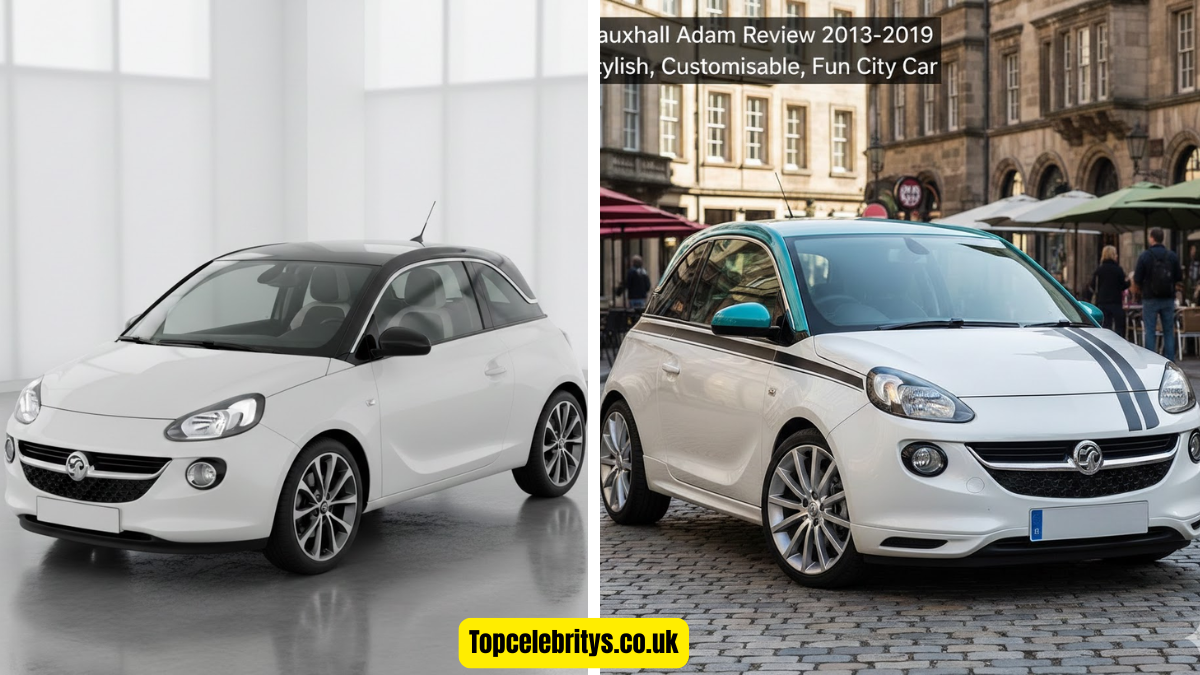
If you’ve ever wandered around city streets and noticed a small car that seems to have its own personality, chances are it was a Vauxhall Adam. Launched in 2013, this three-door city car quickly carved a niche for itself with its vibrant looks, playful design, and extensive personalisation options. Unlike your typical compact car, the Adam wasn’t about practicality alone—it was about making a statement, even in stop-and-go traffic. I’ve spent years observing city cars, and the Adam is one of those models that people either love immediately or find a bit quirky, but rarely ignore.
A Fresh Take on the City Car
When Vauxhall introduced the Adam, the idea was clear: small cars don’t have to be boring. Unlike the brand’s more conventional models like the Corsa or Astra, the Adam focused on personality first. Its compact dimensions made it perfect for urban life, but the emphasis was clearly on style and individuality.
One thing that struck me immediately is the two-tone paint options. Many cars offer a splash of colour here and there, but the Adam made it central to its identity. You could pair a bright roof with a contrasting body colour, choose funky interior trims, and even personalise details like mirror caps and stitching. It wasn’t just about showing off—it was about giving drivers the freedom to make the car their own.
Exterior Design: Standing Out in Traffic
It’s impossible to talk about the Adam without mentioning its looks. The front end is compact but expressive, with sharply styled headlights that give it a slightly mischievous appearance. From the side, the short overhangs and rounded lines give it a playful, almost cartoonish feel—but in a charming way.
Compared to a Fiat 500 or Mini, the Adam is less retro and more contemporary, but it still taps into that same youthful vibe. Even today, driving past one makes you notice its cheerful silhouette, especially when paired with one of those bright, two-tone combinations. And while some critics said it lacked the aggressive stance of the Mini, for me, that’s part of its appeal—it’s friendly, approachable, and fun.
Interior: Personalisation Meets Practicality
Step inside a Vauxhall Adam, and you’re greeted by a cabin that matches the car’s exterior in boldness. The seats often feature coloured stitching, while the dashboard incorporates matching trims. I remember test-driving an Adam with bright red accents, and it genuinely lifted the mood after a long day.
Space is obviously limited, particularly in the rear. Taller passengers will find legroom tight, but the front seats are surprisingly comfortable, and everything feels well thought out for a small city car. Infotainment systems evolved through the production years, starting with basic media screens and Bluetooth, eventually offering more modern connectivity features.
The Adam’s focus was clearly not on family practicality—it’s a city companion, not a weekend getaway vehicle—but the interior cleverly maximised its footprint without feeling cramped.
Engine Options and Performance
Performance varied depending on the trim and year. The base models came with small 1.2-litre or 1.4-litre engines, ideal for daily commutes and city driving. While they weren’t particularly fast, they were nimble and responsive enough for tight corners and urban traffic.
For enthusiasts, there was the Adam S, equipped with a 1.4-litre turbocharged engine that brought a peppy punch and more engaging handling. I’ve had a chance to drive an Adam S on winding roads, and while it’s far from a sports car, the small size and precise steering made it genuinely fun. It’s the kind of car that rewards light-footed driving and careful cornering, rather than outright speed.
Fuel economy was decent, but not class-leading. Some rival city cars could eke out slightly better mpg, but considering the Adam’s weight and spirited engine options, the compromise was acceptable. Running costs tended to be a bit higher than the cheapest small cars, mostly due to insurance and parts costs for personalised trims.
Variants and Personalisation
One of the Adam’s biggest selling points was its variety. Trims like JAM, SLAM, GLAM, and the sportier Adam S allowed buyers to pick a style that suited them. Beyond trims, the car’s real charm came from its personalisation options. Roof colours, mirror caps, wheel designs, and interior panels could all be mixed and matched.
I spoke to a few owners who admitted that they spent nearly as much time choosing colours and trims as they did picking engines. It was almost like designing a mini fashion statement on four wheels. For city dwellers who care about individuality, this flexibility was a major draw.
Handling and Ride Comfort
Despite its size, the Adam feels planted on the road. The steering is light, making tight city manoeuvres easy, while the suspension absorbs bumps reasonably well for a small car. On longer journeys, the ride can feel a bit firm, particularly on models with sportier trims, but it never becomes punishing.
Parking is a joy. I remember squeezing one into a tight London bay with minimal effort—something that larger rivals would struggle with. This combination of compact agility and playful handling makes the Adam genuinely enjoyable around town.
Pros and Cons: Realistic Insights
No car is perfect, and the Vauxhall Adam has its quirks. Here’s a balanced view based on personal experience and owner feedback:
Pros:
- Bold, expressive design that stands out.
- Extensive personalisation options.
- Fun to drive in city environments.
- Reasonably comfortable front cabin.
- Good handling for its size.
Cons:
- Limited rear space and boot room.
- Fuel economy not top-tier.
- Higher insurance and running costs for personalised models.
- Not ideal for long motorway journeys.
From my perspective, the Adam excels as a city companion. If you want a stylish, fun car that reflects your personality, it’s a strong choice. But if practicality is your main concern, you might look elsewhere.
The Adam in Daily Life
I’ve observed the Adam in everyday scenarios, and it often turns heads. One morning, I parked next to a bright blue Adam, and people walking by commented on its cheerful design. It’s the kind of car that sparks conversation, which is rare in the compact segment.
Owners I’ve met appreciate it for commuting, running errands, and weekend trips. While luggage space is tight, many don’t mind—it’s a car for those who prioritise style over carrying capacity. The Adam’s size also makes city traffic less stressful, which is a big plus for urban drivers.
Why the Model Discontinued
Production ended in 2019, which disappointed some fans. The reasons were mainly market-driven: small city cars were under pressure from rising SUV popularity, stricter emissions standards, and Vauxhall’s focus on more profitable segments.
Despite this, the Adam lives on in the used car market. Many buyers seek it out specifically because of its unique design and personality, rather than conventional metrics like boot space or mpg. Its rarity today even adds a touch of exclusivity.
Tips for Potential Buyers
If you’re considering a used Adam, here are some real-life tips:
- Check personalisation options: Some trims have rare colour combinations that may cost more to repair.
- Inspect the interior: Look for wear on custom trims, particularly seats and dashboards.
- Test the steering and suspension: Even though it’s a small car, ensure it feels responsive.
- Consider insurance: Some sportier variants or rare trims carry higher premiums.
- Think about daily needs: Rear passenger space is limited, so factor in your typical passenger load.
Comparing the Adam to Rivals
In the city car segment, it often came up against the Fiat 500, Mini, and Volkswagen Up. Compared to these, the Adam is more personalisable than most and slightly less retro than the Fiat or Mini. Performance-wise, the Adam S competes reasonably well with a 1.4 turbo, though it won’t outpace the Mini Cooper.
It’s not the cheapest, but for people who want a compact car with a sense of individuality, it’s hard to beat.
FAQs About Vauxhall Adam
1. Is the Vauxhall Adam reliable?
Yes, generally. Like most small cars, it’s best to maintain service intervals, particularly for personalised trims which may have bespoke parts.
2. How much does a used Vauxhall Adam cost?
Prices vary based on year, trim, and condition, but most fall between £5,000 and £12,000 in the UK market.
3. Can the Vauxhall Adam handle long trips?
It can, but the ride is firmer on longer journeys, and boot space is limited. It shines in city driving.
4. What is the best trim for performance?
The Adam S is the sportiest option, with a turbocharged 1.4L engine and enhanced handling.
5. Are spare parts expensive for the Adam?
Parts for basic models are reasonable, but highly personalised trims or rare colours can cost more to replace.
Conclusion
The Vauxhall Adam is one of those cars that brings personality into everyday driving. It’s compact, fun, and full of style, making city commutes more enjoyable and parking less stressful. While it may not be the most practical or fuel-efficient car in its class, the individuality and joy it brings often outweigh those drawbacks. For anyone who values expression, colour, and a playful driving experience, the Adam remains a memorable choice even years after production ended.
Read Also