
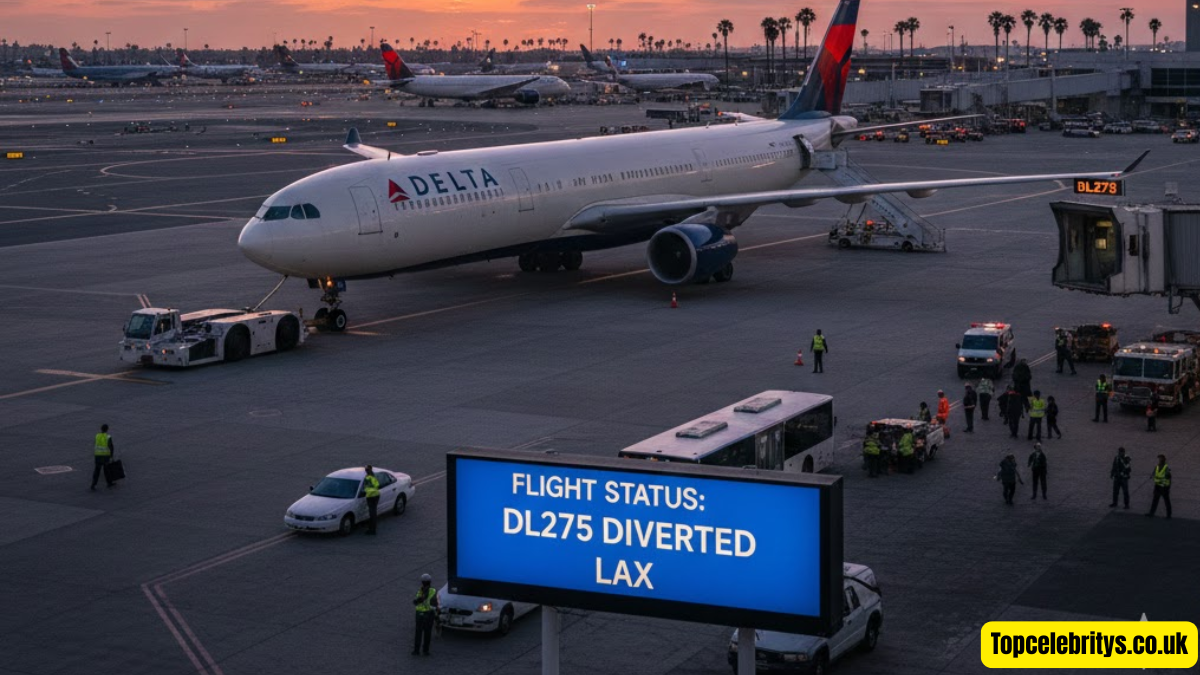
Air travel can be smooth and uneventful most of the time, but occasionally, even routine flights turn into unexpected challenges. One such incident that caught the attention of aviation enthusiasts and frequent flyers alike was the diversion of Delta Flight DL275 to Los Angeles. What began as a routine long-haul journey quickly became an emergency situation, reminding everyone onboard that safety is always the top priority in aviation.
In this article, we’ll break down exactly what happened, why it happened, and what passengers and airlines do during such events.
What Happened on Delta Flight DL275?
Delta Flight DL275 was en route from Detroit to Tokyo-Haneda, a journey of over 12 hours. Midway over the North Pacific, the crew detected an issue with one of the aircraft’s Rolls-Royce Trent XWB engines. Specifically, the engine’s anti-ice system, which prevents ice buildup at high altitudes, malfunctioned.
For those unfamiliar, the anti-ice system is crucial during long flights over cold regions. Ice accumulation can affect the engine’s performance and, in worst cases, compromise flight safety. Once the pilots noticed the fault, they immediately coordinated with air traffic control to find the nearest suitable airport. That airport happened to be Los Angeles International Airport (LAX), necessitating a significant course change.
Why Diversions Are Necessary
It’s easy to underestimate why a diversion is such a big deal. Passengers often get frustrated by the sudden change in plans, but from a safety perspective, it’s completely justified. On flights like DL275, any engine irregularity is treated seriously because mid-Pacific options for emergency landings are limited.
The decision to divert to LAX was influenced by several factors:
- Proximity to a major airport: LAX has long runways and advanced emergency services.
- Passenger safety: Ensuring everyone has a smooth landing without additional risks.
- Maintenance access: Specialized teams capable of handling Rolls-Royce engines are more accessible at large hubs.
In short, diversions are proactive safety measures, not signs of negligence.
What Passengers Experience During a Diversion
Being on a flight that suddenly changes course can be unsettling. Passengers on DL275 reported feeling a mix of curiosity, concern, and even mild panic. The flight attendants, trained for emergencies, reassured everyone, explaining that diversions are a standard procedure in aviation safety delta flight dl275 diverted lax.
From personal accounts shared on social media, most passengers noted the following:
- Increased communication: The crew frequently updated passengers about the flight’s status.
- Extended flight time: The diversion added a few hours to the journey.
- Minor discomfort: Longer time in the air can mean cramped seats and additional fatigue.
Some passengers even shared humorous takes on the unexpected detour. One traveler joked that he hadn’t planned to “tour California” but ended up enjoying an unscheduled view of L.A. from above. It’s moments like these that humanize air travel and remind us that even professionals can’t control everything in the sky delta flight dl275 diverted lax.
Understanding Engine Anti-Ice Systems
For those curious about the technical side, the Rolls-Royce Trent XWB engine is one of the most advanced jet engines in operation. Its anti-ice system works by heating certain engine parts to prevent ice from forming. When it malfunctions, ice can accumulate on critical components, potentially causing power loss or other issues.
Aircraft engineers design these systems to fail safely, meaning the plane can continue flying but not at maximum efficiency. This is why the crew can make a safe diversion rather than an immediate emergency landing over open water.
Airline Procedures During a Diversion
Delta Airlines, like other major carriers, follows strict protocols when a flight needs to divert. These include:
- Immediate crew notification: Pilots assess the issue and communicate with airline operations.
- Air traffic coordination: Air traffic controllers reroute the plane to the nearest suitable airport.
- Passenger updates: Announcements keep travelers informed, reducing panic and confusion.
- Ground support readiness: Maintenance teams and emergency services prepare for landing.
Passengers often see only a small part of this behind-the-scenes effort, but it’s highly coordinated and well-rehearsed. The goal is always to minimize risk while keeping everyone informed.
Real-Life Lessons From Delta Flight Dl275 Diverted Lax
This incident serves as a reminder that aviation is both complex and incredibly safe. Diversions like this are not failures—they are proof that systems and protocols work as intended. Travelers can learn a few lessons:
- Always carry essentials in carry-on luggage; unexpected layovers happen.
- Stay calm and listen to crew instructions; they are trained for these exact situations.
- Flight delays and diversions, while inconvenient, prioritize life over schedule.
From a broader perspective, these events highlight the importance of modern engine technology and pilot training. Every diversion teaches airlines how to refine procedures and improve passenger experiences.
The Media and Public Reaction
News about Delta Flight Dl275 Diverted Lax quickly spread online. Aviation forums, Twitter threads, and Reddit discussions were filled with firsthand passenger experiences. Some praised the crew for their professionalism, while others expressed frustration at the inconvenience.
Interestingly, media coverage focused less on the drama and more on technical details, explaining why such diversions are necessary. This approach helps passengers understand that these incidents are part of the normal risk management in aviation, not catastrophic failures.
Passenger Tips for Handling Flight Diversions
Even if you hope never to experience a diversion, it’s good to be prepared. Passengers can take a few simple steps:
- Stay informed: Use airline apps to track flight updates.
- Pack smart: Keep snacks, water, and entertainment handy.
- Stay patient: Crew and air traffic control are working to ensure safety.
- Document if desired: Some travelers like to share updates on social media, but always respectfully.
These steps make a stressful situation more manageable and even a little educational.
FAQs About Delta Flight Dl275 Diverted Lax
1. Why was Delta Flight DL275 diverted to LAX?
The diversion was due to a malfunction in the engine’s anti-ice system, a critical component that ensures safe operation at high altitudes.
2. Was the plane at risk during the diversion?
Not significantly. The aircraft was designed to handle such malfunctions safely, allowing pilots to divert without compromising passenger safety.
3. How long was the flight delayed because of the diversion?
While exact times vary, passengers reported that the detour added a few hours to their journey.
4. Do airlines compensate passengers for diversions?
Policies vary. Airlines may offer accommodations or meal vouchers, but compensations are not automatic since safety, not inconvenience, caused the diversion.
5. Can engine anti-ice failures happen often?
These systems are generally very reliable. Malfunctions are rare, but when they occur, diversions are standard procedure to ensure safety.
Conclusion
Delta Flight Dl275 Diverted Lax was a dramatic reminder of how aviation safety works behind the scenes. While it was inconvenient for passengers, the situation was handled professionally, emphasizing that safety always comes first. For travelers, it’s an opportunity to appreciate the skill of pilots, crew, and ground teams who manage unexpected situations every day. Life at 38,000 feet is rarely predictable, but with proper protocols, it remains remarkably safe.
Read Also